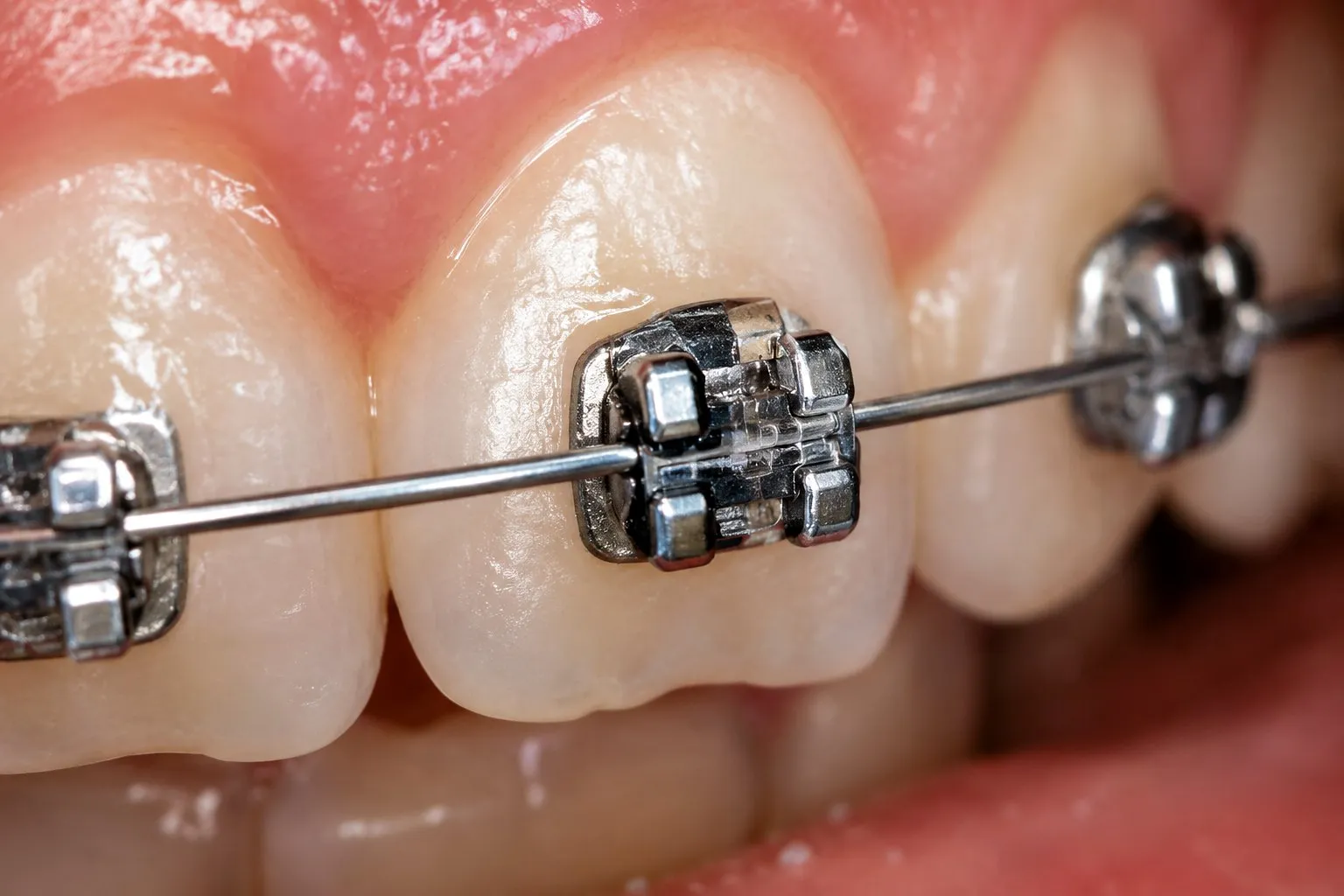
Fixed braces look simple: small brackets stuck to the teeth, with a wire running between them. Behind that simple look is a system that moves every tooth towards a planned position, which is pre-set or customised within the brackets attached to the teeth.
Here is how it works, in plain terms.
The brackets: an instruction for each tooth
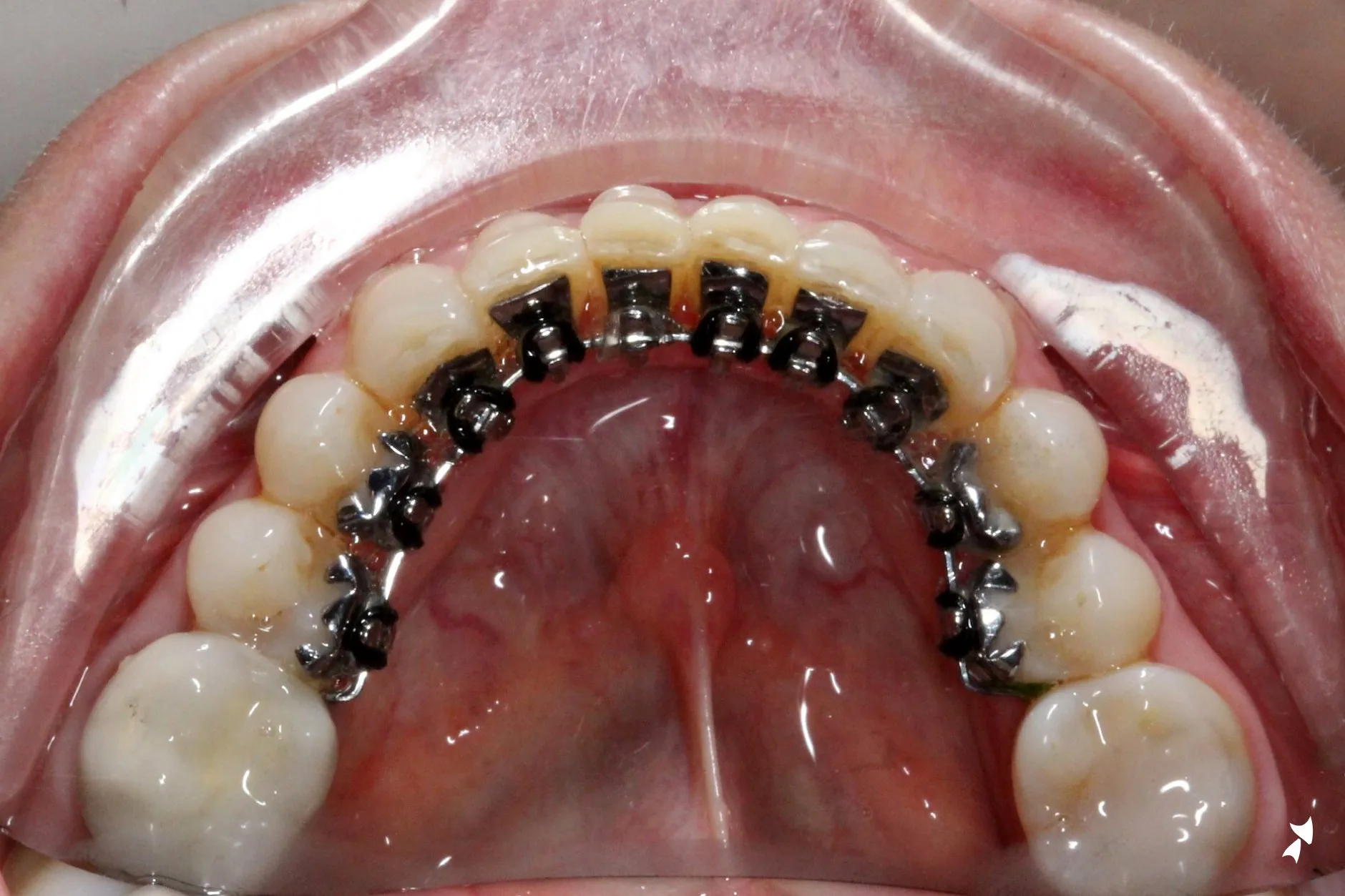
A bracket is bonded to the front (or, with lingual braces, the back) of each tooth. It is not just a handle for the wire. Each bracket is shaped to carry an instruction, known as a prescription, for where that tooth should sit.
The prescription tells the tooth how it should move, so that it ends up in the correct place relative to the teeth around it. The bracket position matters to relay the correct instruction to the tooth.
The wire: what makes the teeth move
The wire runs through, and engages, every bracket. When teeth are crooked, the wire has to bend to reach each bracket. Modern archwires are springy and always try to return to their original, smooth arch shape.
As the wire straightens out, it applies force on each bracket, and the brackets pass that force to the teeth. All the teeth start to shift together and begin to line up. Early wires are thin and flexible; over the following months they are swapped for thicker, stiffer wires that give more control and relay more of that instruction to the teeth.
Why teeth don’t move in a straight line
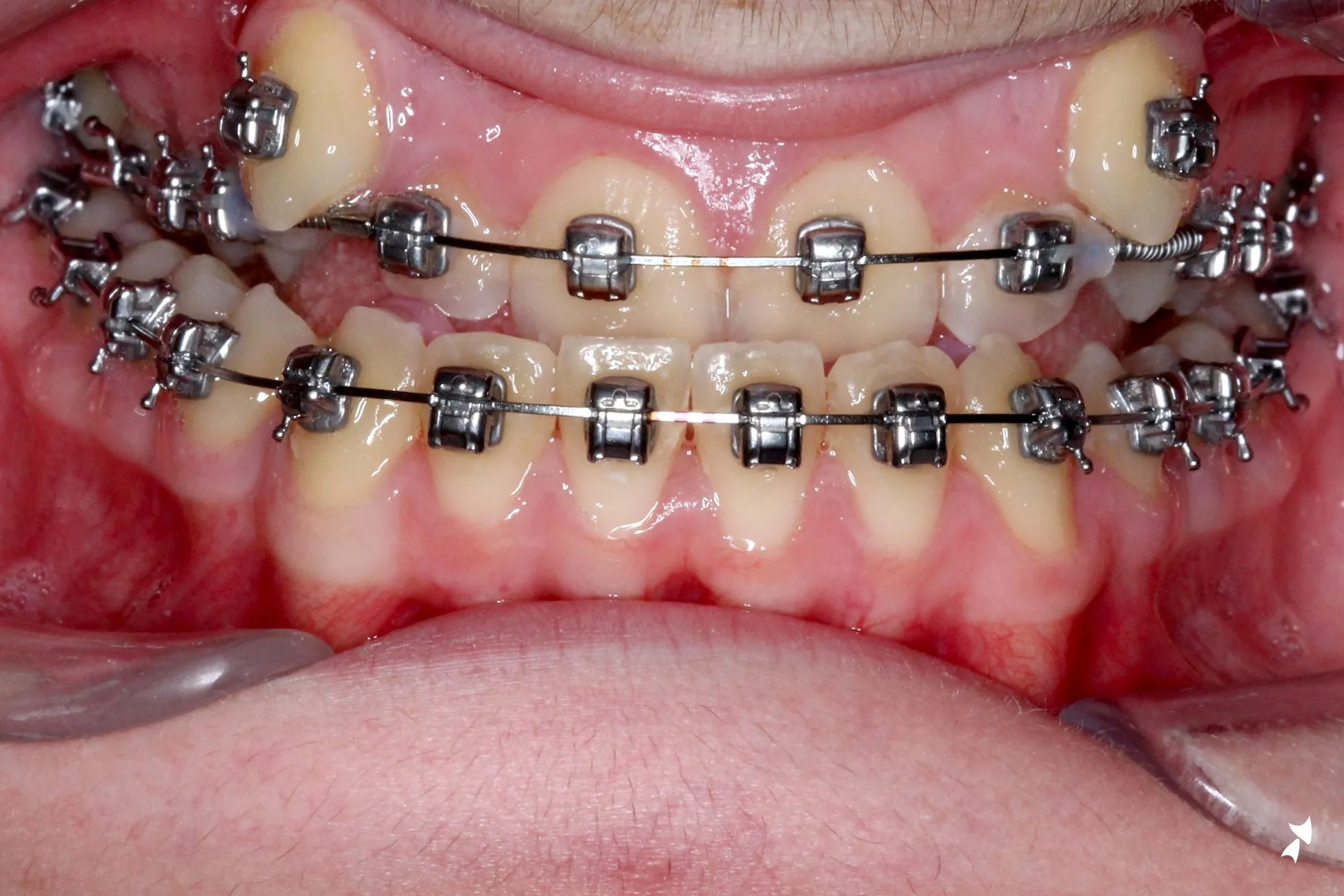
Braces create a complex force system. Because one wire links every tooth, a push on one tooth is felt by its neighbours too. Every movement has knock-on effects elsewhere in the arch.
So while teeth are lining up, you may notice things that seem unexpected:
- Small gaps opening between teeth
- Some teeth moving in the right direction while others drift the wrong way for a while
- Front teeth briefly looking more prominent before they settle
This is common and it is expected. I expect these side effects and aim to correct them as treatment goes on.
Fine-tuning: steering each tooth into place
Once the teeth are broadly aligned, the work becomes more targeted. At your adjustment appointments, I may:
- Reposition brackets so a tooth gets a corrected instruction
- Bend the wire to add small, targeted movements to individual teeth
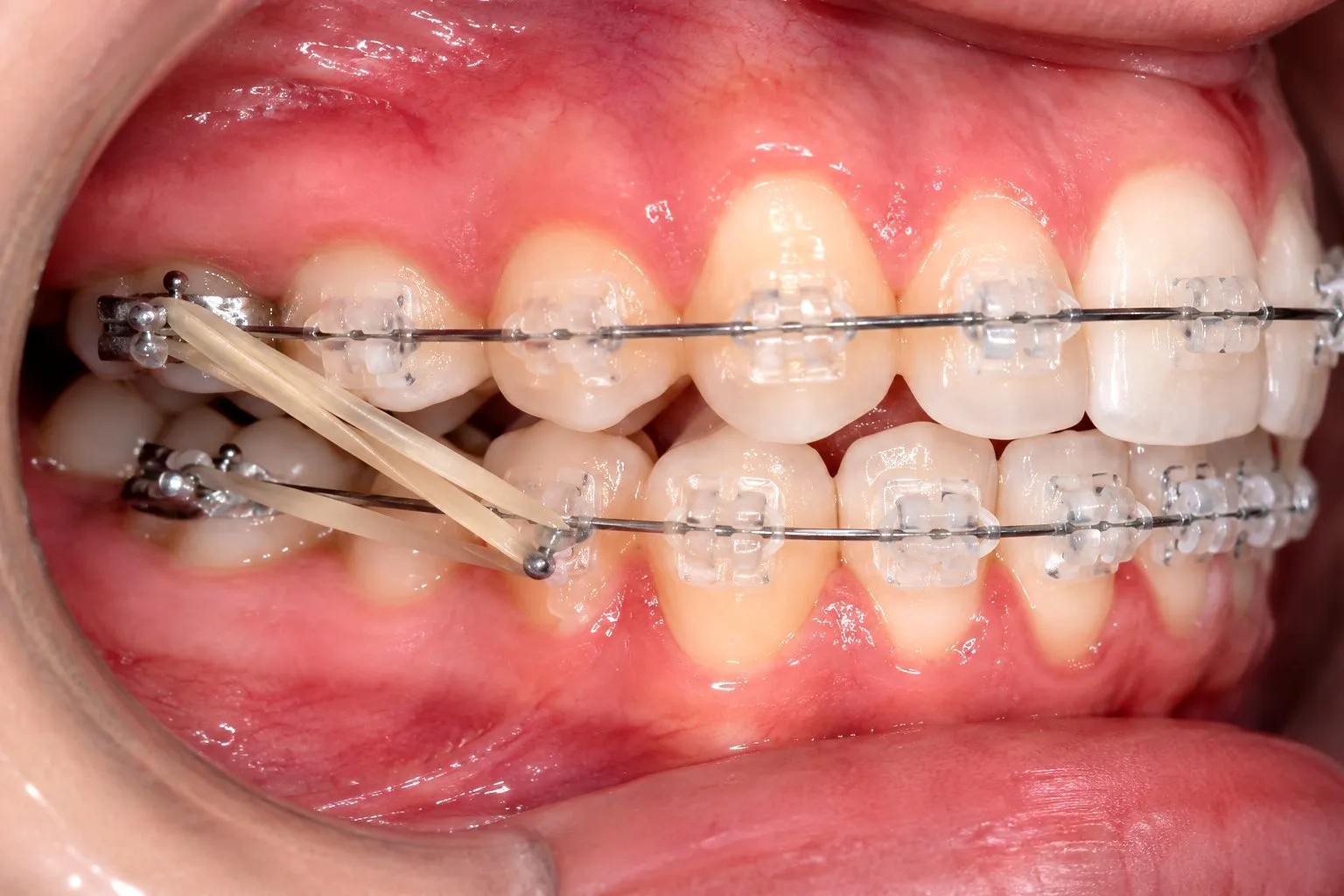
- Add elastics (small rubber bands you wear between the upper and lower braces) or other auxiliaries to correct how the jaws and teeth bite together
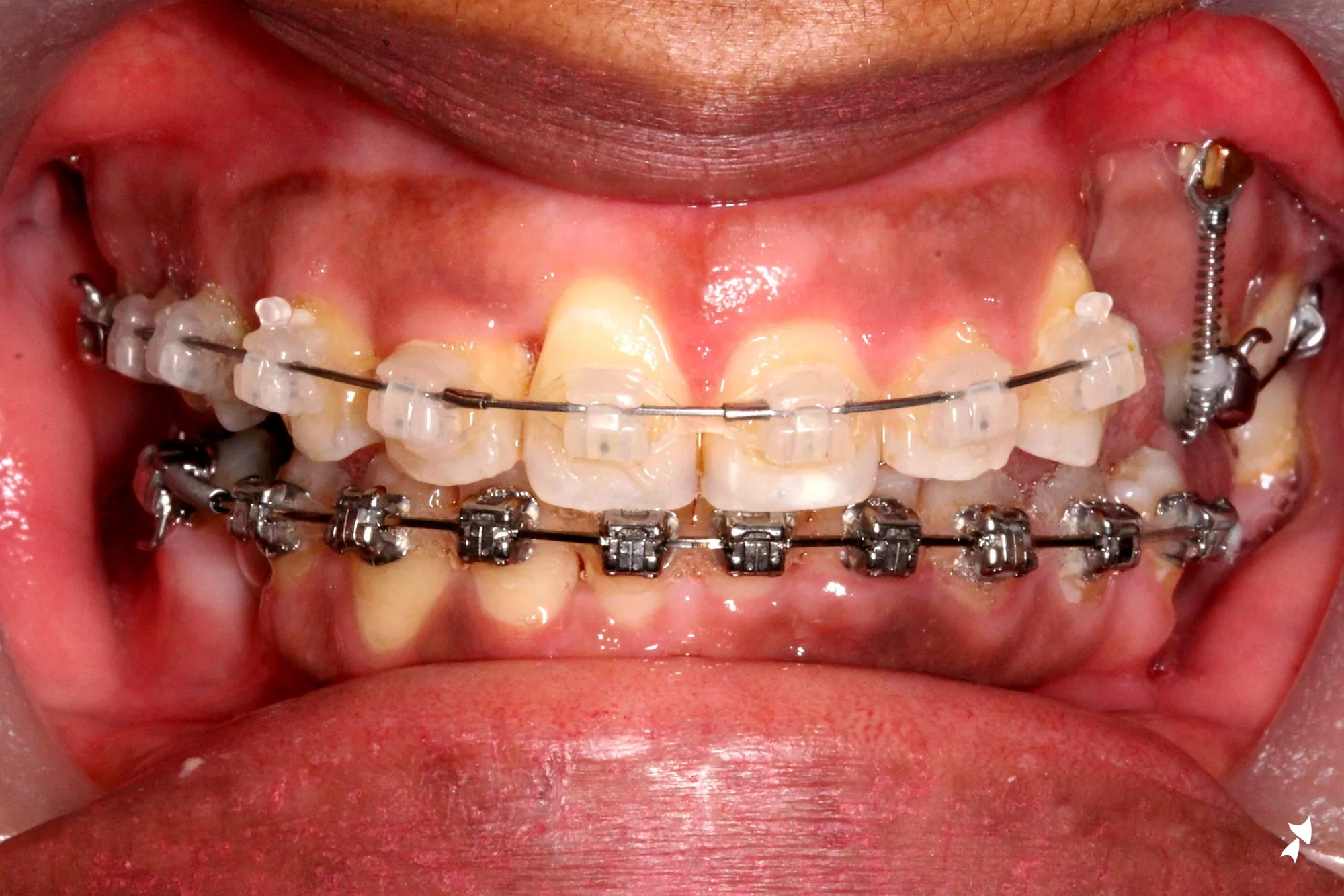 Mini-screw with a spring
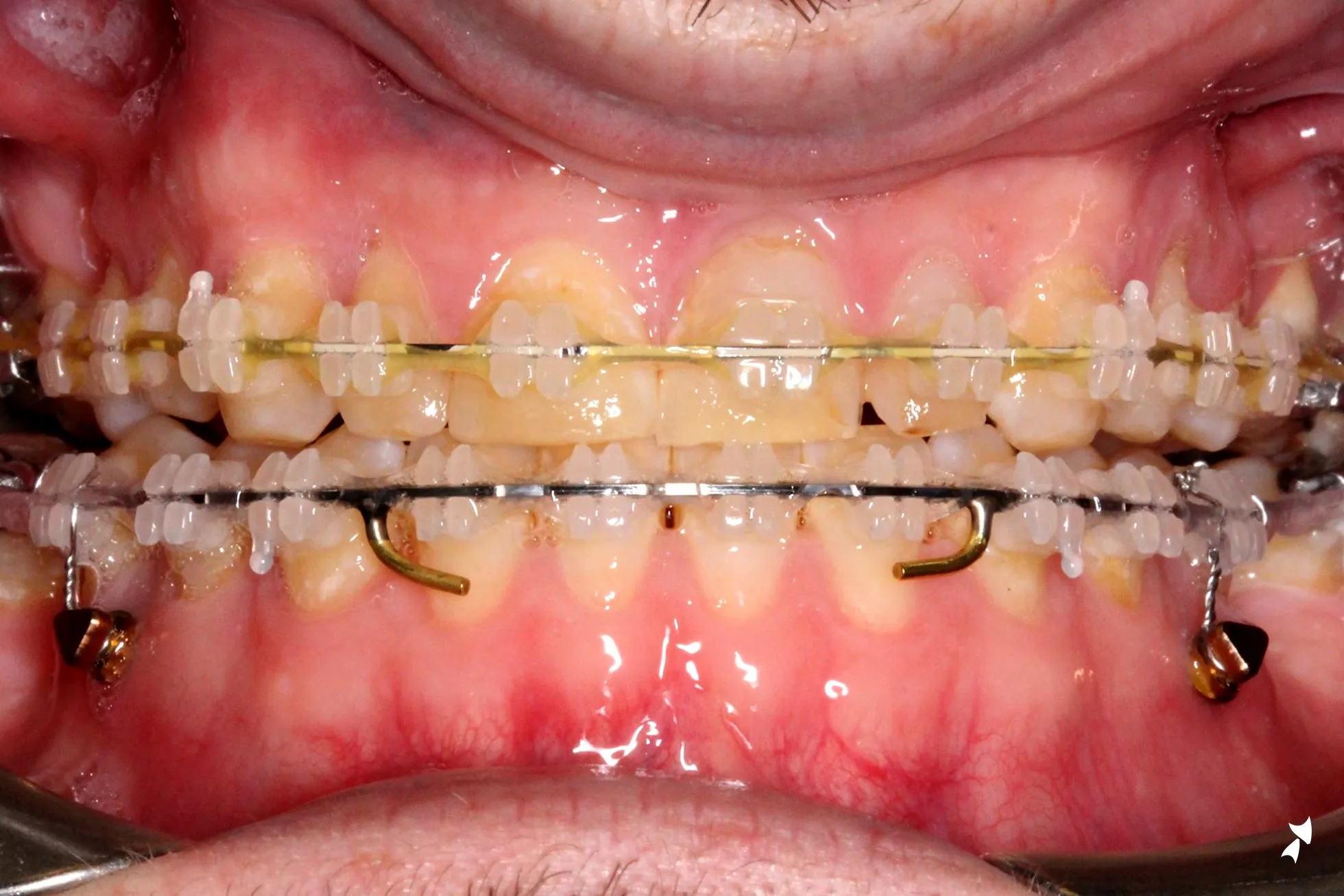 Mini-screws with hooks
How long does it take?
The teeth often look straight surprisingly early. Alignment alone can take as little as 3–12 months.
But straight teeth are not the finish line. Correcting the bite, closing any spaces and fine-tuning the position of each tooth (known as finishing) take up the rest of treatment. This later stage is what takes the result from good to great, makes it work well when you bite and chew, and helps maintain the stability of your result. For more on treatment length, see my post on how long orthodontic treatment takes.
Thinking about braces?
If you would like to know whether fixed braces are right for you, and what your treatment might involve, get in touch to book a consultation at bookings@dromranorthodontist.co.uk.
This article is general information about orthodontic treatment. It is not dental or medical advice and is not a substitute for an examination by a qualified dental professional.