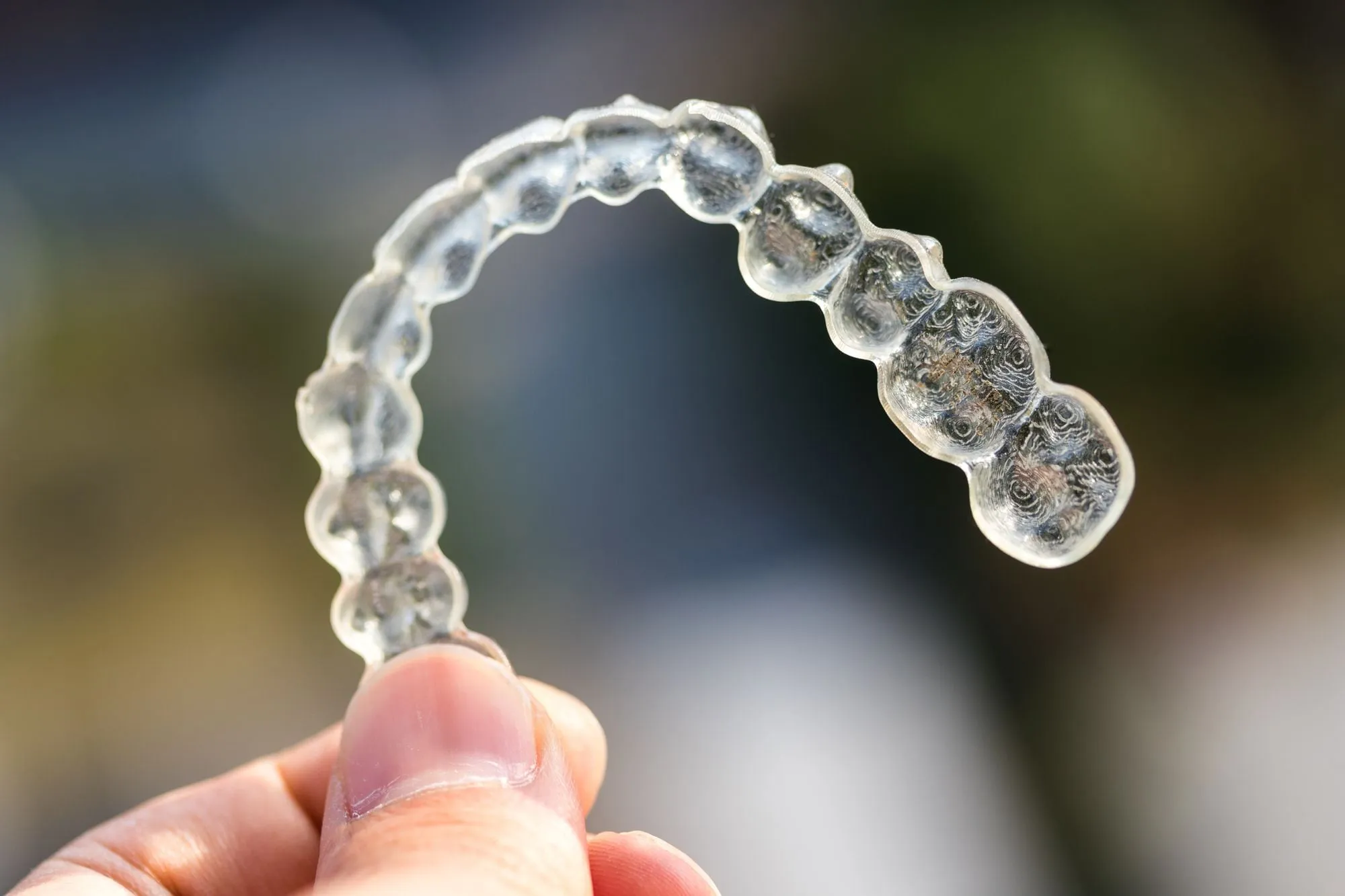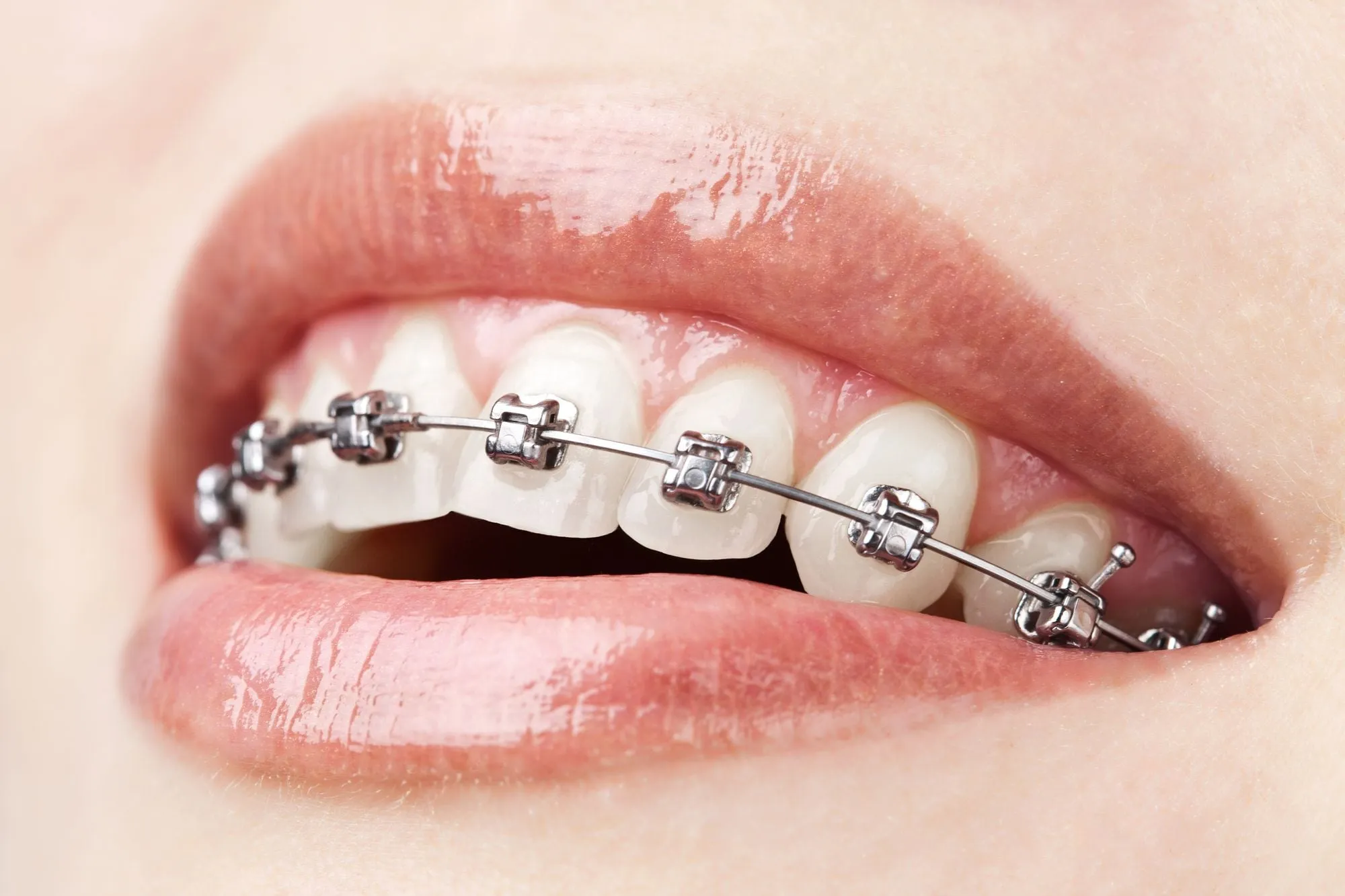
Interceptive orthodontic treatment is early intervention in a child’s developing teeth and jaws, carried out to prevent problems from forming or getting worse and to guide the adult teeth as they come through.
It happens while a child still has a mix of baby and adult teeth. The aim is not a perfect smile. It is to deal with a specific problem at the point when it is easiest to correct, so that later treatment is simpler, shorter, or sometimes not needed at all.
Why an assessment at age 7 to 9?
Between 7 and 9, the first adult molars and front teeth have usually come through, and the jaws are still growing. That gives us an opportunity to assess:
- How the upper and lower jaws are growing in relation to each other.
- Whether the adult teeth are developing in the right positions, and whether any are missing or extra.
- Whether there is enough room for the teeth still to come.
- How the teeth bite together.
- Baby teeth
- Mix of baby and adult teeth
- Adult teeth
Most children seen at this age need no treatment, only monitoring. For those who do have a developing problem, this is often the window in which a small intervention makes the biggest difference.
Examples of interceptive treatment
- Correcting a crossbite. When upper teeth bite inside the lower teeth, the jaw can shift to one side on closing. A simple brace or an expander can correct this early.
- Widening a narrow upper jaw. An expander can create room for crowded teeth while the jaw is still growing.
- Arch development. Where the arches are V-shaped and short of space, treatment can broaden them and make room, so that the teeth can erupt in more favourable positions.
- Holding space after early loss of a baby tooth. A space maintainer can prevent neighbouring teeth drifting into the gap meant for the adult tooth.
- Guiding a canine that is heading off course. Timely removal of a baby canine can help an adult canine come through in the right place, and may avoid surgery later.
- Reducing prominent upper front teeth. Teeth that stick out are more likely to be damaged in a fall. Early treatment can reduce that risk.
- Helping a child stop a thumb or finger habit. Persistent sucking habits can change the shape of the jaw and the bite.
- Clearing the way for a delayed tooth. An extra tooth or a retained baby tooth can block an adult tooth from coming through.
- Guiding jaw growth. Some growth problems, such as a lower jaw that sits ahead of the upper, respond best to treatment at a young age.
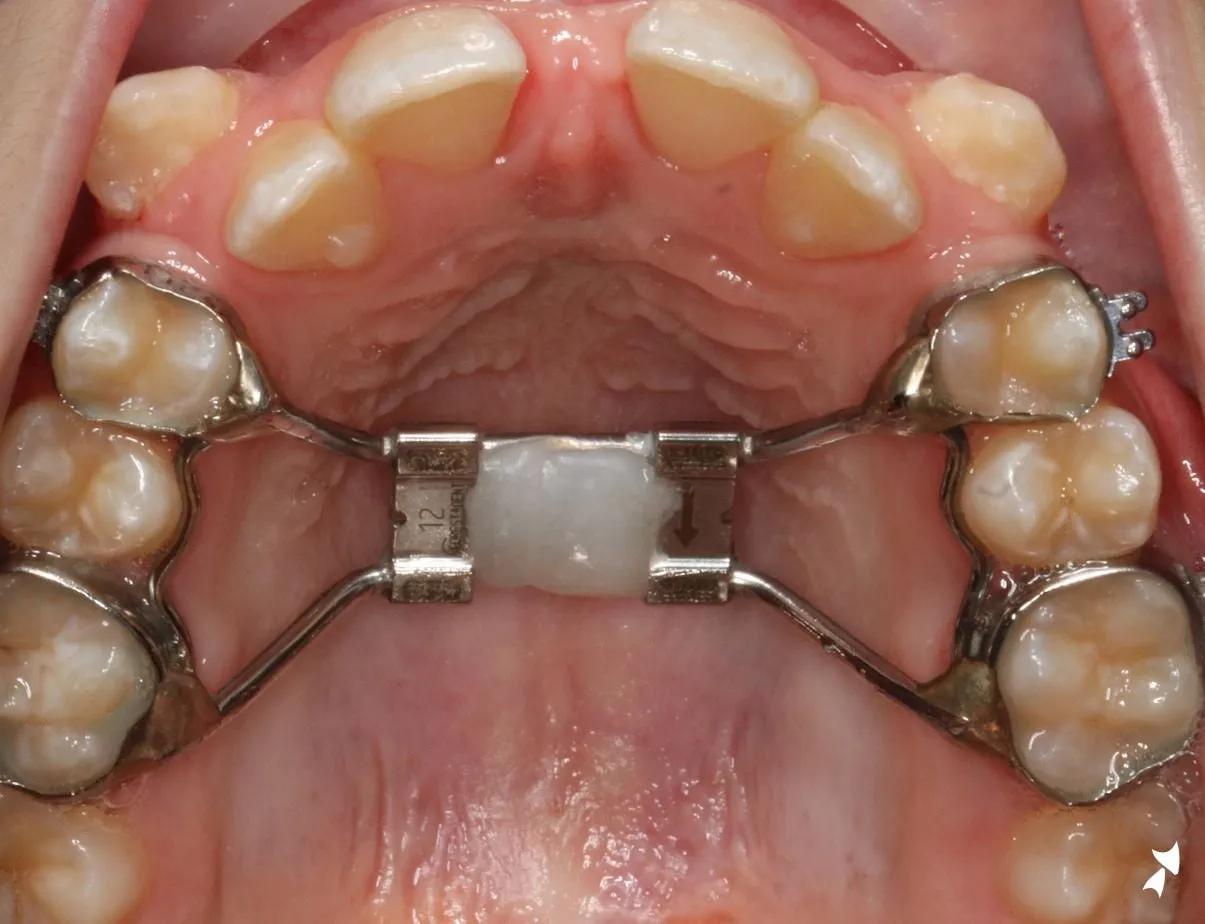

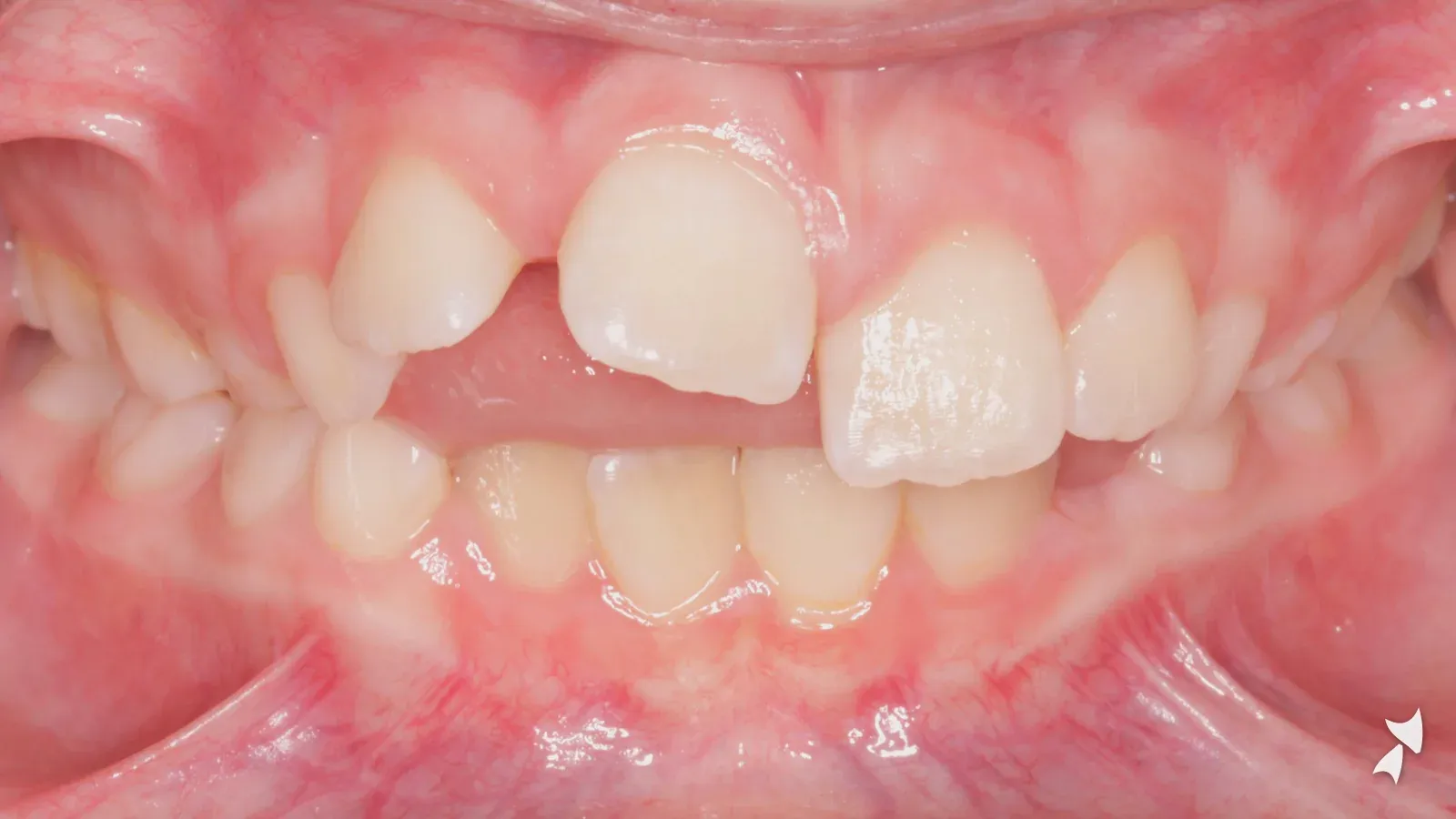 Before
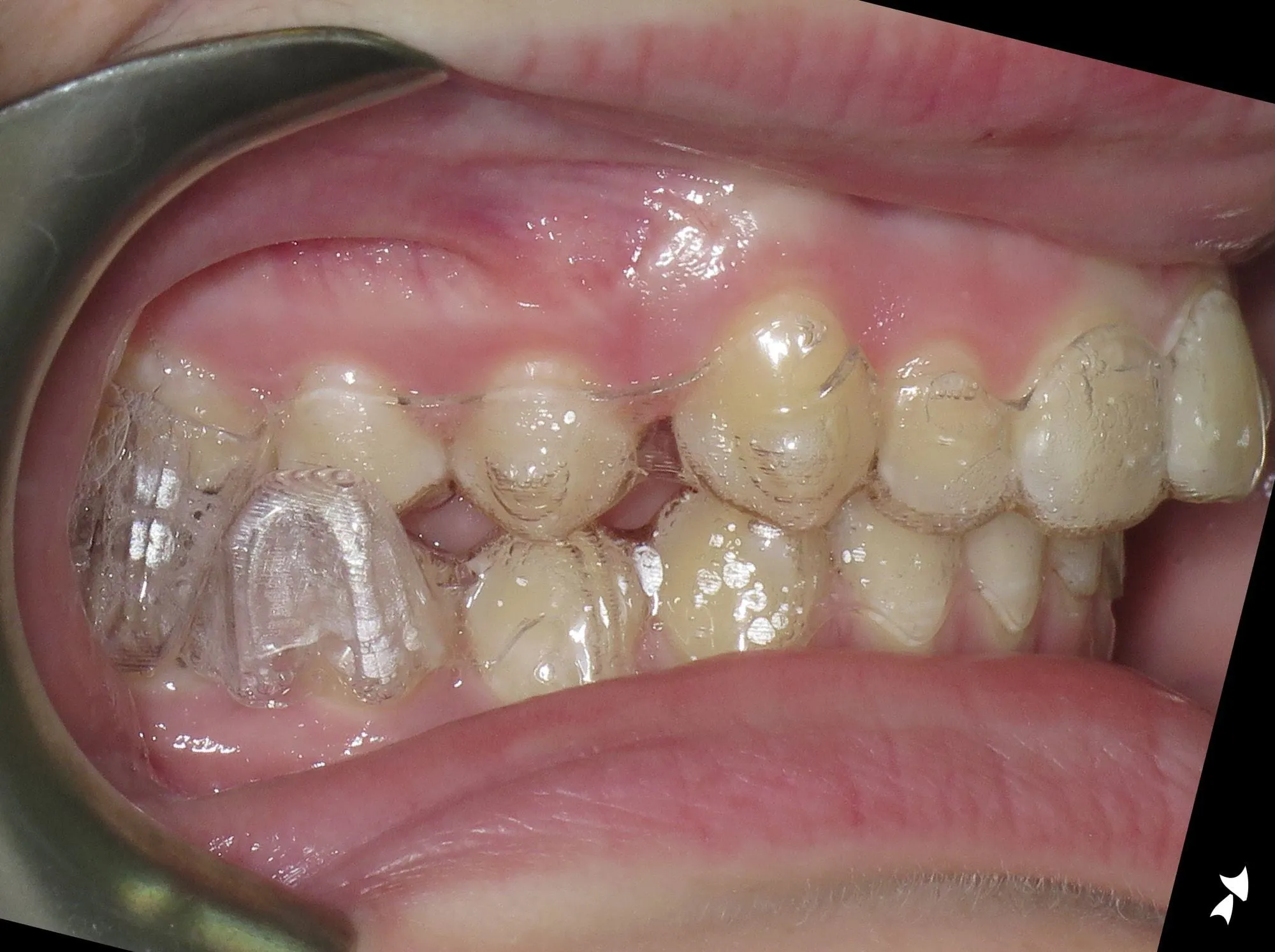
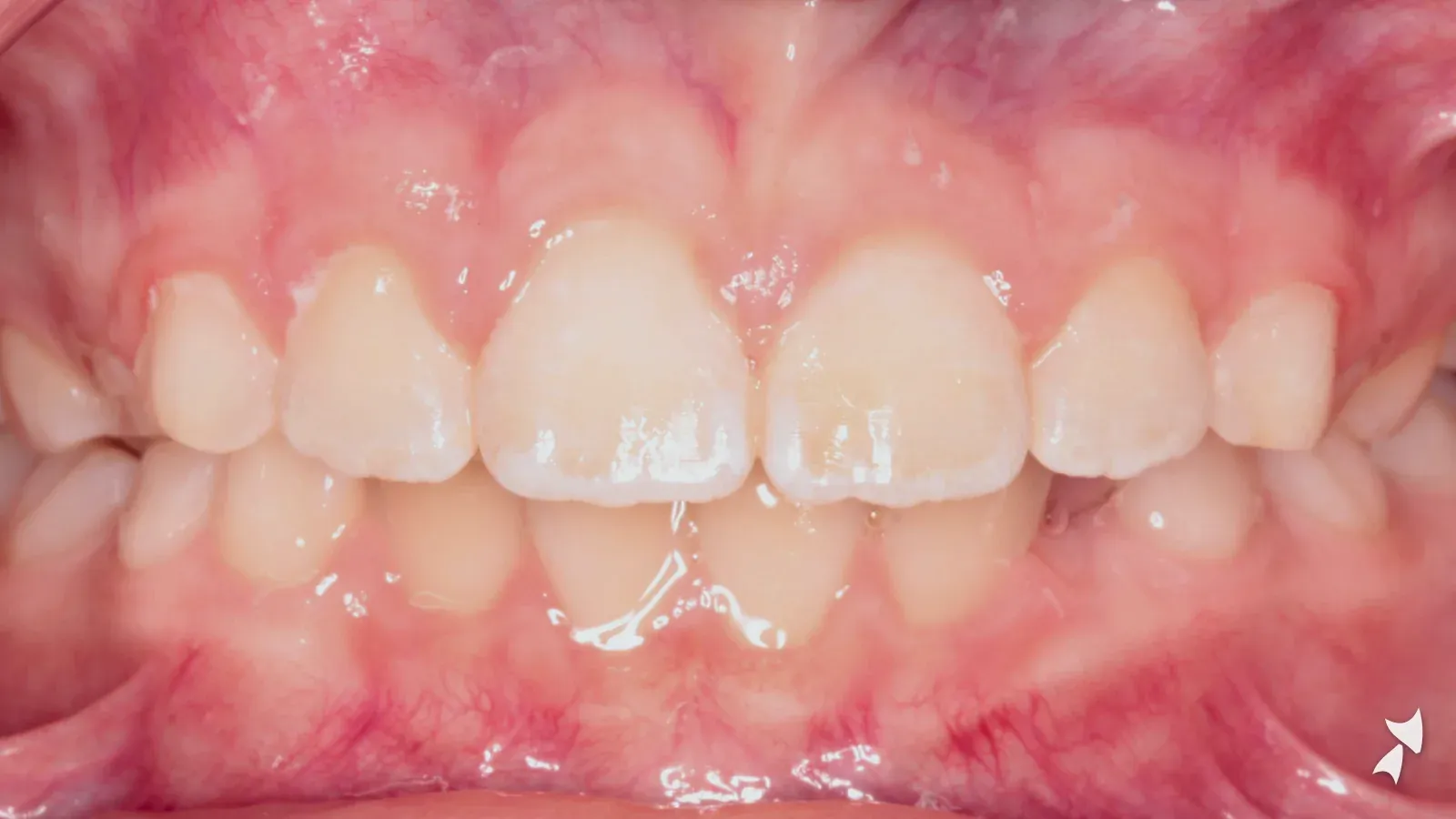 After
After“Not clinically necessary” does not mean “no benefit”
Parents are sometimes told that early treatment is not clinically necessary. In the context of NHS orthodontics, that is a statement about whether a problem meets the threshold for NHS-funded treatment.
It does not mean there are no potential benefits. A developing problem can fall below that threshold and still be worth addressing, or at least worth understanding, while your child is growing.
That is why an assessment is worthwhile. It tells you what is developing, what the options are, and what is likely to happen if you wait. You can then make an informed decision, including the decision to monitor development for now.
What to expect
Interceptive treatment is usually short and targeted at one problem. It often involves a simple appliance worn for a matter of months, followed by a period of monitoring while the remaining adult teeth come through. The active treatment usually takes around 6 to 12 months.
It does not usually replace orthodontic treatment in the teenage years. Many children who have interceptive treatment still have a course of orthodontic treatment later. The difference is that the later treatment is often much more straightforward, because the more difficult problem has already been dealt with. This can be difficult to appreciate at the time. Orthodontists who have treated thousands of cases have a much better idea of what happens when problems are left or monitored, and can use that experience to advise you.
Book an assessment
I am a GDC-registered specialist orthodontist with over a decade of experience. If your child is between 7 and 9, or you have a concern about how their teeth are developing at any age, please get in touch at bookings@dromranorthodontist.co.uk.
This article is general information about orthodontic treatment. It is not dental or medical advice and is not a substitute for an examination by a qualified dental professional.